
 By
By
Introduction
Washington, DC is more than just the political center of the United States—it is also a hub of civic responsibility, culture, and community engagement. Beyond monuments and government offices, the city thrives on its strong tradition of service.
Thank you for reading this post, don't forget to subscribe!From neighborhood cleanups to cultural festivals and youth mentoring programs, volunteer and community life events Washington DC highlight the capital’s dedication to collective growth and shared responsibility.
The Spirit of Volunteerism in DC
The residents of Washington, DC represent diverse cultural and professional backgrounds. This diversity has cultivated an environment where civic engagement is not only valued but deeply ingrained in the city’s lifestyle.
Key organizations leading the way include:
- Serve DC – Coordinating disaster preparedness and service programs.
- DC Central Kitchen – Reducing hunger and creating job opportunities.
- HandsOn Greater DC Region – Connecting people with community service opportunities.
These groups, along with universities, local churches, and grassroots associations, organize year-round events that strengthen community ties.
Main Points – Highlights of Community Engagement
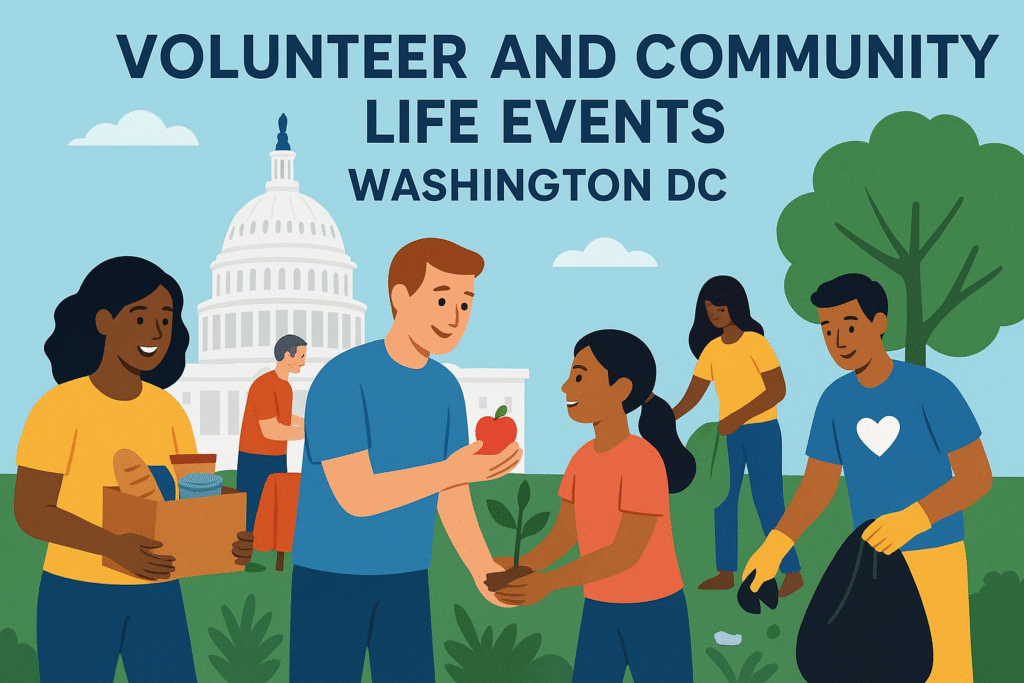
- Volunteer Drives: Food donations, blood drives, and clothing collections.
- Neighborhood Celebrations: Festivals, block parties, and cultural fairs.
- Environmental Projects: River cleanups, park restoration, and tree planting.
- Youth Programs: Tutoring, mentoring, and skills workshops.
- Health Initiatives: Free medical checkups, fitness events, and mental health awareness.
These highlights show how volunteer and community life events Washington DC bring people together for causes that matter.
Types of Community Life Events in Washington DC
1. Civic and Cultural Gatherings
Events such as the Smithsonian Folklife Festival and local farmers’ markets are more than entertainment—they are platforms for cultural preservation and community involvement. Volunteers help organize logistics, guide visitors, and ensure smooth operations.
2. Educational Support Programs
Many nonprofits and schools focus on bridging educational gaps. Opportunities include after-school tutoring, literacy workshops, and technology training. These events empower both students and adult learners.
3. Environmental and Sustainability Projects
The capital’s rivers and parks are vital community assets. Groups frequently organize cleanup efforts along the Potomac and Anacostia Rivers. Tree-planting campaigns and recycling drives also encourage environmental stewardship.
4. Humanitarian and Social Services
Community kitchens, shelters, and food banks rely on volunteers for meal preparation and distribution. These events directly impact families experiencing food insecurity and homelessness.
Why Volunteer Events Matter
Participating in community events delivers long-term benefits for both individuals and neighborhoods:
- Building Stronger Communities: Shared projects strengthen trust and collaboration.
- Developing New Skills: Volunteers often gain leadership, communication, and organizational experience.
- Creating Connections: Networking opportunities arise with people from diverse backgrounds.
- Boosting Emotional Well-Being: Helping others brings a sense of purpose and fulfillment.
- Driving Lasting Impact: Continuous participation supports systemic improvements in education, health, and environment.
How to Get Involved in DC’s Community Life
Residents can easily participate in events by connecting with organizations and platforms such as:
- Serve DC – Offers a database of volunteer opportunities.
- VolunteerMatch – Lists local and virtual service projects.
- Neighborhood Associations – Share local initiatives and service events.
- Universities and Schools – Open many of their student-led volunteer programs to the wider community.
- Faith-Based Groups – Churches, mosques, and temples frequently organize drives and outreach activities.
The Future of Volunteer and Community Life in DC
Looking forward, Washington, DC’s volunteer landscape continues to evolve. Hybrid volunteerism—where digital and in-person participation intersect—is becoming more common. Environmental sustainability projects and youth empowerment programs are expected to remain at the forefront of community development.
With an increasing focus on inclusivity and innovation, future events will continue to serve as a foundation for stronger neighborhoods and long-term civic engagement.
Conclusion
Washington, DC’s true identity goes beyond government buildings—it lives in the hands of its residents who dedicate time to building a stronger city. The diverse range of volunteer and community life events Washington DC demonstrates the collective power of service.
Whether through cultural celebrations, environmental stewardship, or humanitarian projects, each initiative represents an opportunity for people to connect and contribute. For locals and newcomers alike, participation in these events is not just service—it’s a pathway to belonging and creating lasting change.