
 By
By
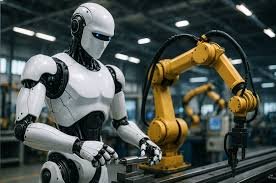
The rapid evolution of manufacturing technologies has fundamentally reshaped how industries approach production, efficiency, and safety. At the core of this transformation lies the seamless integration of intelligent machines and precise data collection mechanisms. Industrial Automation and Sensor Connectivity in Modern Robotics represent the critical foundation required to build truly autonomous and responsive factory environments. As facilities transition from traditional assembly lines to dynamic, interconnected ecosystems, the demand for robust hardware reaches unprecedented levels. Engineers and system architects are now tasked with designing frameworks that withstand extreme conditions while maintaining flawless communication networks. Understanding the dynamics of Industrial Automation and Sensor Connectivity in Modern Robotics is essential for organizations aiming to remain competitive.
Thank you for reading this post, don't forget to subscribe!The Evolution of Smart Manufacturing and Component Integration
The transition toward fully automated facilities requires a meticulous approach to how individual components communicate. In contemporary robotic systems, the sheer volume of data generated by proximity sensors, vision systems, and motion controllers demands highly reliable physical connections. Without dependable signal transmission, even the most advanced algorithms cannot prevent operational failures.
“Reliable data transmission is the lifeblood of modern automated systems, bridging the gap between physical motion and digital intelligence.”
To ensure consistent performance across connected machines, engineers rely on standardized interfaces capable of handling rigorous operations. For instance, m12 a coded connectors are frequently employed in automated facilities to guarantee secure signal transmission between critical components. These specific interfaces have become the industry standard for linking sensors and actuators to main control units.
The success of Industrial Automation and Sensor Connectivity in Modern Robotics heavily hinges on these micro-level engineering decisions. Selecting the appropriate connection technology directly impacts the longevity and efficiency of the robotic deployment. Facility managers must prioritize these foundational hardware elements to build scalable architectures that easily adapt to future advancements.
Geographic Information Systems and Spatial Awareness in Automation
While traditional factory floors operate in fixed environments, the rise of autonomous mobile robots (AMRs) and unmanned aerial vehicles (UAVs) introduces the need for advanced spatial awareness. Geographic Information Systems (GIS) and precise mapping technologies are actively integrated into indoor industrial spaces. This convergence allows robotic units to navigate complex warehouse layouts dynamically, avoiding obstacles and optimizing routing paths.
The integration of LiDAR and high-resolution spatial sensors requires robust data pipelines to process environmental information instantaneously. Industrial Automation and Sensor Connectivity in Modern Robotics must account for the high bandwidth required by these spatial mapping tools. When a mobile robot scans its surroundings, sensory data must travel flawlessly through the internal hardware architecture to the central processing unit.
The fusion of GIS technology with factory automation creates a comprehensive digital twin of the operational environment. Engineers can monitor the exact location and status of every machine, leading to highly efficient resource allocation. This spatial intelligence transforms static production lines into adaptable workflows that respond proactively to logistical bottlenecks.
Key Hardware Requirements for Harsh Industrial Environments
Deploying sophisticated technology in industrial settings presents unique physical challenges that standard commercial hardware cannot survive. Manufacturing plants often expose equipment to extreme temperatures, moisture, dust, and corrosive chemicals. Therefore, the physical infrastructure supporting Industrial Automation and Sensor Connectivity in Modern Robotics must adhere to stringent protection standards, ensuring operational continuity under severe conditions.
| ENVIRONMENTAL THREAT | HARDWARE REQUIREMENT | IMPACT ON ROBOTIC SYSTEMS
|
|---|---|---|
| High Moisture | IP67/IP69K Sealing | Prevents short circuits |
| Mechanical Vibration | Threaded Locks | Ensures data transmission |
| Electromagnetic Noise | Advanced Shielding | Maintains data accuracy |
Beyond environmental sealing, electromagnetic interference (EMI) poses a significant threat to data integrity in facilities packed with heavy machinery. Unshielded cables can disrupt delicate signals traveling from sensors to controllers. Implementing heavily shielded connectivity solutions is a non-negotiable requirement for maintaining precision in automated workflows.
Engineers must conduct thorough environmental assessments before specifying hardware components for any robotic installation. By anticipating specific stressors, teams can design resilient systems that drastically reduce maintenance overhead. Ruggedized hardware forms the invisible shield protecting the sophisticated software driving smart factories.
Data Acquisition and Real-Time Processing Strategies
The true value of an automated system lies in its ability to collect, process, and act upon data in milliseconds. Effective data acquisition strategies are paramount for predictive maintenance and overall system optimization. When Industrial Automation and Sensor Connectivity in Modern Robotics are properly aligned, facilities transition from reactive troubleshooting to proactive management.
To achieve this operational excellence, system architects focus on several core data processing strategies:
- Edge Computing Integration: Processing data locally at the sensor level to reduce latency.
- Protocol Standardization: Utilizing unified communication protocols to ensure interoperability between diverse machines.
- Continuous Monitoring: Deploying diagnostic tools that constantly evaluate signal strength.
Implementing these strategies requires a holistic view of the manufacturing ecosystem. Every sensor, actuator, and control unit must function as a cohesive unit. The continuous flow of high-fidelity data allows machine learning algorithms to identify hidden patterns.
This emphasis on real-time processing elevates physical connectors to critical infrastructure components. Without a flawless physical layer, sophisticated data acquisition strategies will inevitably falter, leading to decreased profitability.
The Role of Predictive Maintenance in Maximizing Uptime
As manufacturing facilities become increasingly complex, the financial impact of unexpected equipment failure grows exponentially. Predictive maintenance has emerged as a vital strategy to combat these costly interruptions, relying heavily on continuous data streams from embedded sensors. By monitoring minute changes in vibration or temperature, system operators can identify potential mechanical degradation long before a breakdown occurs.
The effectiveness of these predictive models is entirely dependent on the quality and consistency of the incoming data. Industrial Automation and Sensor Connectivity in Modern Robotics provides the necessary framework to support these advanced diagnostic algorithms. If the physical connection between a vibration sensor and the central analytics engine is compromised, the predictive maintenance system is rendered useless, exposing the facility to significant risk.
Investing in high-quality connectivity components is a direct investment in operational uptime. Engineers must ensure that every cable, connector, and interface is rated for the specific lifecycle demands of the robotic equipment. By prioritizing robust physical infrastructure, organizations can leverage predictive analytics to schedule maintenance proactively, maximizing asset lifespan.
The Future Landscape of Intelligent Robotic Ecosystems
Looking ahead, the intersection of advanced robotics, spatial intelligence, and ruggedized hardware will redefine industrial capabilities. The ongoing miniaturization of components allows for agile robotic designs, capable of performing intricate tasks in confined spaces. As these technologies mature, the barrier to entry for smaller enterprises will decrease, democratizing access to smart manufacturing tools.
The continuous refinement of Industrial Automation and Sensor Connectivity in Modern Robotics will pave the way for fully autonomous production facilities. In these environments, human intervention will shift from physical labor to strategic oversight and algorithm optimization. The reliability of underlying physical connections will remain the determining factor in the success of these deployments.
Embracing these technological advancements is a necessity for long-term industrial survival. Organizations investing heavily in robust sensor networks and reliable connectivity infrastructure today will secure a formidable competitive advantage tomorrow.