
 By
By
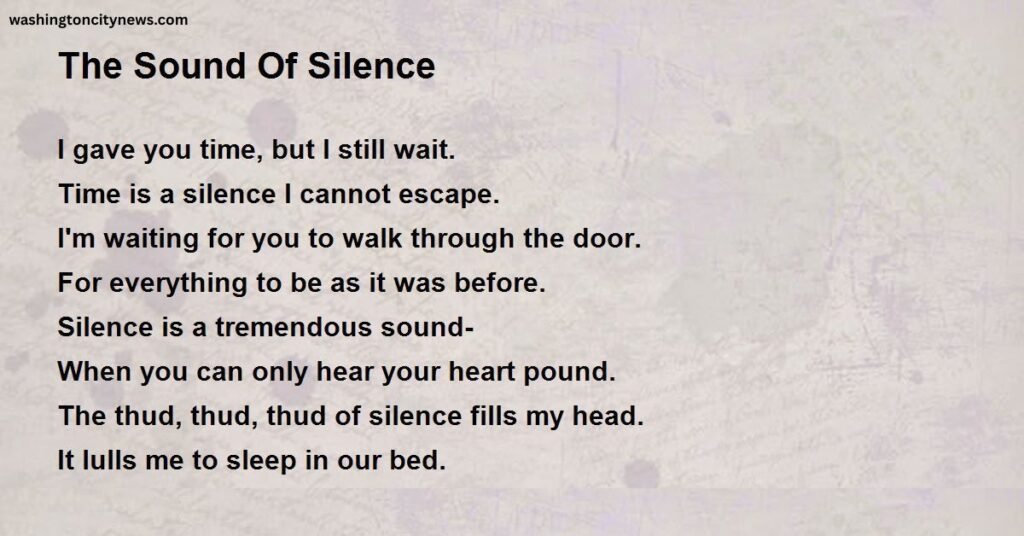
Silence is often misunderstood. To many, it feels like emptiness, a void that demands to be filled with words, music, or noise. Yet silence, when we listen closely, is not an absence but a presence—rich, layered, and poetic in its own right. Before language takes shape, before stories are uttered, before the world is defined by sound, there is silence. This is what I call the poetic before: a state of being that precedes expression, a journey into stillness that holds the seeds of creation.
Thank you for reading this post, don't forget to subscribe!Silence as a Beginning
Every poem begins in silence. A writer stares at the blank page; an artist contemplates the unmarked canvas; a musician breathes before striking the first note. This initial pause is not merely empty—it is charged with potential. The silence before creation is like fertile soil, holding within it the possibility of endless forms.
When we think of poetry, we often imagine words arranged with rhythm and beauty. But at its heart, poetry is an attempt to capture what cannot be fully spoken. Silence, therefore, is poetry’s first companion. The unspoken spaces between lines, the pauses between breaths, the stillness before articulation—these are the places where meaning gathers.
The poetic before is that threshold moment: when silence still reigns, but something is stirring. It is the hush before dawn, the quiet before a storm, the inward breath before confession. To step into this space is to acknowledge that silence has its own language, one that speaks not in sentences but in presence.
The Spiritual Weight of Silence
Many spiritual traditions honor silence as a path to wisdom. In Buddhism, silence allows the mind to observe itself without interference. In Christian mysticism, silence is a way to encounter the divine beyond words. Indigenous practices across the world recognize the sacredness of stillness in nature, where silence is never truly empty but filled with the voices of wind, water, and earth.
The poetic before is aligned with this sacred understanding of quiet. It is not passive; it is active listening. Silence allows us to hear what often goes unnoticed: the beating of our own hearts, the shifting of seasons, the subtle rhythm of being alive. In a world flooded with constant noise, to reclaim silence is to reclaim depth.
Silence in Art and Literature
Great works of art often remind us of the power of what is left unsaid. The Japanese aesthetic of ma, for example, celebrates the space between elements as much as the elements themselves. A haiku may use only a few words, but its brevity points us toward the vast silence that surrounds those words.
Similarly, composers like John Cage explored silence as music. Cage’s famous piece 4’33” instructs musicians not to play their instruments for four minutes and thirty-three seconds. The result is not emptiness but an invitation to listen—to the audience shuffling, to the hum of the room, to the world itself.
Literature, too, thrives on silence. Consider the weight of a pause in dialogue, the ellipsis trailing off into uncertainty, the white space that separates stanzas. These silences are not gaps in meaning but reservoirs of it. They remind us that what cannot be spoken often matters most.
The Noise of Modern Life
To journey into the poetic before today is to resist a culture that fears silence. Modern life is saturated with sound—notifications, advertisements, background music, endless chatter. We are conditioned to fill every pause with something: a podcast, a video, a scroll through social media. Silence makes many of us uneasy, as though it exposes a void we would rather ignore.
Yet it is precisely because silence is scarce that it becomes valuable. Just as darkness allows us to see the stars, silence allows us to see ourselves. Without it, we lose the ability to reflect, to imagine, to connect deeply with others.
The journey into silence, then, is an act of courage. It requires us to turn off the noise and confront the truths that rise in stillness. In the poetic before, we are left with nothing but ourselves—and that is where transformation begins.
Silence as Resistance
There is also a political dimension to silence. In times of oppression, silence can be imposed—a forced absence of voice. But silence can also be chosen, wielded as resistance. Think of the silent vigils held for victims of violence, the moments of silence observed after tragedies, the silent protests where presence alone speaks louder than words.
In these contexts, silence is not passive. It becomes a space charged with meaning, a refusal to conform to noise that distorts truth. The poetic before is not about erasing voice but about preparing it, strengthening it, and ensuring that when words do emerge, they carry weight.
Learning to Listen
To embrace the poetic before is to become a better listener. Too often we hear only to respond, waiting for our chance to speak. Silence teaches us to listen without anticipation, to receive without rushing to fill the space.
Nature offers the best lessons here. Sit quietly by a river, and you will notice the layers of sound: the trickle of water, the rustle of leaves, the call of a distant bird. None of these compete; they exist in harmony within silence. Likewise, in relationships, silence can deepen intimacy. The quiet comfort between close friends or lovers often says more than words ever could.
Listening is not merely about hearing others but about attuning ourselves to.
Cultivating Silence in Daily Life
How can we journey into the poetic before in our everyday lives? It begins with small choices:
-
Pause before responding. Allow silence to shape your words rather than rushing to fill the air.
-
Create rituals of stillness. Whether through meditation, prayer, or simply sitting quietly with tea, give yourself moments of unstructured silence.
-
Disconnect from constant noise. Turn off the background music, step away from screens, and walk in nature without headphones.
-
Honor the pauses in art. Read poetry aloud and notice the spaces between lines. Listen to music with attention to silence as well as sound.
These practices remind us that silence is not wasted time but essential nourishment for the soul.
The Poetry of What Comes Before
Ultimately, the poetic before is about reverence for beginnings. Before speech, there is silence; before light, darkness; before creation, stillness. To honor this “before” is to recognize that the most powerful expressions arise not from noise but from quiet preparation.
Silence does not diminish poetry—it makes it possible. It is the breath that allows the voice to rise, the space that gives shape to form, the pause that makes rhythm meaningful. When we journey through silence, we discover that it is not a void but a presence, one that speaks in whispers too profound for words.
In embracing the poetic before, we do not turn away from the world. We turn toward it more fully, attuned to its subtleties, open to its mysteries, ready to create with clarity and depth. For in silence, we find the source.