
 By
By
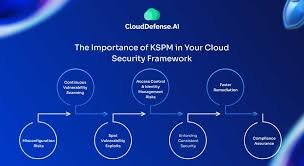
As organizations transition operational workloads to cloud environments, the complexity of maintaining a secure infrastructure increases significantly. While significant investment is often directed toward perimeter defense, the primary driver of cloud data exposure remains simple configuration oversights. A single misconfigured storage resource or an overly permissive network rule can bypass sophisticated security layers, providing unauthorized access to sensitive corporate data. Bridging the gap between perceived security and the actual state of the cloud environment requires a rigorous, data-driven approach to Cloud Security Posture Management (CSPM).
Thank you for reading this post, don't forget to subscribe!CRITICAL MISCONFIGURATIONS IN CLOUD INFRASTRUCTURE
One of the most persistent risks in cloud environments is the presence of publicly accessible storage buckets. Inadvertently setting a storage resource to “public” allows for the unauthenticated discovery and extraction of sensitive data, such as personally identifiable information (PII) or internal intellectual property. This often occurs when default settings are not audited during the initial provisioning phase of a project.
Another frequent vulnerability is the exposure of administrative ports, such as RDP (3389) or SSH (22), directly to the internet. These ports should be restricted to internal networks or secured via a VPN. Leaving them exposed invites automated brute-force attacks and credential stuffing, as threat actors continuously scan the internet for open entry points into private corporate networks. Implementing regular, automated cloud configuration audits is essential for identifying these exposed endpoints before they are exploited by external actors.
MANAGING ENTITLEMENT AND ACCESS RISKS
Organizational growth often leads to “permission creep,” where high-level administrative privileges are granted to a broad range of users to prevent operational friction. If a significant percentage of staff maintains the authority to modify core network settings, the probability of a catastrophic human error increases. This risk is amplified in multi-cloud environments where identity definitions vary between providers.
Effective CSPM provides a unified view of the identity and access landscape, allowing security teams to audit whether assigned permissions align with actual job requirements. For example, dormant accounts belonging to former employees often retain full administrative control over production servers long after their departure. A centralized management platform automatically flags these identity risks, ensuring that access is revoked systematically rather than relying on manual, error-prone processes that often fail during rapid scaling.
STANDARDIZING OVERSIGHT THROUGH SECURITY BENCHMARKS
Maintaining a secure cloud environment requires moving beyond ad-hoc manual checks. Organizations must establish a consistent monitoring baseline that does not depend on intermittent human intervention. Adhering to recognized cloud security benchmarks, such as those provided by CIS or NIST, allows teams to define what a “secure state” looks like for their specific environment
By utilizing cloud risk management software, security leaders can visualize the health of their entire digital estate through a single interface. This telemetry-driven approach enables the rapid identification of “red flags”, configurations that deviate from the established baseline, across multi-cloud providers. Standardizing these rules ensures that security remains a constant operational metric rather than a periodic reaction to incidents, providing a more predictable risk profile for the business.
THE IMPORTANCE OF AUTOMATED LOGGING AND COMPLIANCE
A lack of comprehensive logging represents a silent but significant risk. Without a detailed record of system activity, organizations cannot perform effective incident response or forensic analysis following a breach. Logging provides the necessary visibility to determine the origin of an attack, the movement of the threat actor, and the extent of data exfiltration.
Modern CSPM tools automate the collection and analysis of these logs, ensuring that visibility is maintained without manual configuration for every new resource. This continuous attention to detail is fundamental to maintaining cloud compliance with regulations such as GDPR, HIPAA, or SOC 2. By automating the mapping of configuration checks to regulatory requirements, organizations can ensure they remain audit-ready while focusing on core business innovation and service delivery.
CONCLUSION: ADAPTIVE SECURITY FOR EVOLVING INFRASTRUCTURES
As the cloud landscape continues to shift through 2026, the threats associated with misconfigurations will evolve in complexity. Security strategies that were effective for small, localized teams are insufficient for global, highly distributed cloud architectures. Proactive risk management is no longer a luxury but a requirement for maintaining operational continuity and protecting brand reputation.
Maintaining a resilient posture requires constant oversight of both technical settings and the identities that interact with them. By integrating automated CSPM into daily operations, organizations can proactively identify and remediate the errors that pose the greatest risk to their business stability. This holistic approach ensures that security scales at the same pace as the cloud infrastructure it protects.