
 By
By
Introduction
Washington DC is one of the most vibrant cities in the United States, but it also has one of the highest costs of living. For many residents, affordable housing is not just a convenience—it is a necessity. Public housing programmes offer a lifeline to individuals and families struggling with rising rents, ensuring they have access to safe and secure accommodation.
Thank you for reading this post, don't forget to subscribe!Understanding how to apply for public housing in DC is crucial for those who need affordable housing options. While the process may seem daunting, with clear steps and the right guidance, applicants can successfully navigate the system. This article provides a detailed breakdown of eligibility requirements, the application procedure, and essential tips for applicants.
What Is Public Housing?
Public housing is a government-supported housing programme that provides affordable rental homes to low-income individuals, families, the elderly, and people with disabilities. In DC, public housing is managed primarily by the District of Columbia Housing Authority (DCHA), which administers housing units and rental assistance programmes to serve residents in need.
The aim is to ensure that all residents, regardless of income, can access safe, decent, and affordable homes.
Eligibility Requirements
Before applying, it is important to understand who qualifies. To be considered for public housing in Washington DC, applicants must meet certain criteria:
- Income Limits – Applicants must fall within a specific income bracket, usually defined as very low or extremely low income compared to the city’s median income.
- Residency Status – Proof of legal residency or citizenship is required.
- Background Check – Applicants may undergo a criminal background review, as certain offences can affect eligibility.
- Household Size – The number of people in a household influences eligibility and the type of unit available.
Meeting these requirements is the first step towards securing housing assistance.
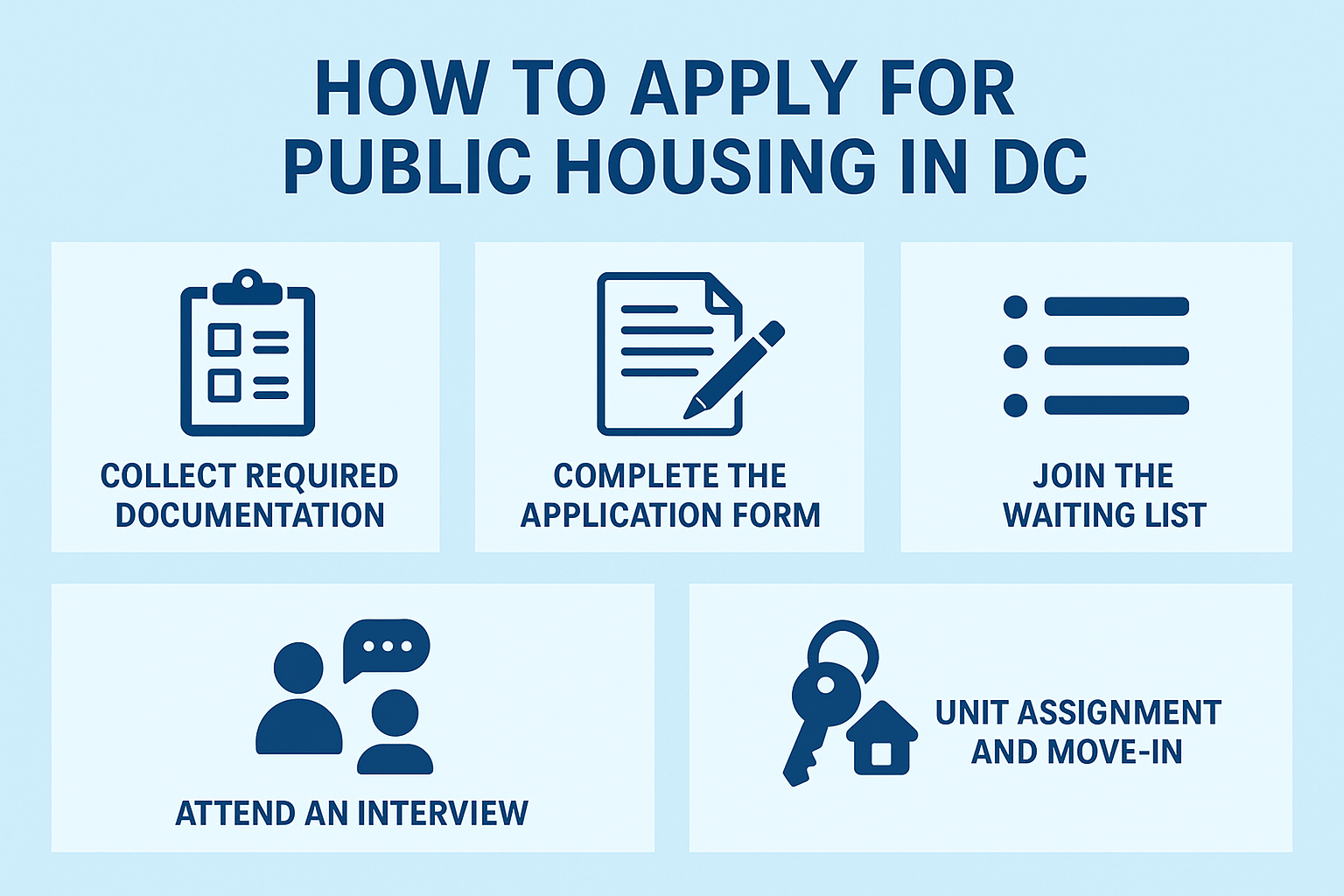
Step-by-Step Guide: How to Apply for Public Housing in DC
The process involves multiple steps, and understanding each stage can prevent delays.
Step 1: Collect Required Documentation
Applicants should gather documents before starting the process. These include:
- Proof of identity (ID card, passport, or driver’s licence)
- Social Security numbers for all household members
- Proof of income (pay stubs, tax returns, or benefit letters)
- Residency documents (utility bills, lease agreements, etc.)
Step 2: Complete the Application Form
Applications can be submitted online through the DCHA website or in person at designated offices. The form requires details about income, family composition, and current housing circumstances.
Step 3: Join the Waiting List
After submission, eligible applicants are placed on a waiting list. Demand for public housing in DC is high, so waiting times can be lengthy. Applicants are advised to keep their information updated while waiting.
Step 4: Attend an Interview
When selected from the waiting list, applicants are called for an interview. This step confirms eligibility and verifies documents.
Step 5: Unit Assignment and Move-In
If approved, applicants are matched with an available unit. Once final checks are complete, they can sign a lease agreement and move in.
Key Programmes Under DC Housing Authority
The DCHA manages various housing programmes to meet different needs:
- Public Housing Units: Affordable rental units owned and managed by the DCHA.
- Housing Choice Voucher Programme (Section 8): Offers rental subsidies that allow families to rent from private landlords.
- Affordable Dwelling Units (ADUs): Properties with controlled rents based on income eligibility.
Understanding these options ensures applicants choose the right path.
Main Points of the News
- Public housing in DC is managed by the District of Columbia Housing Authority (DCHA).
- Applicants must meet income, residency, and background eligibility requirements.
- The process includes gathering documents, submitting applications, joining a waiting list, and attending interviews.
- Programmes include public housing units, Section 8 vouchers, and affordable dwelling schemes.
- Demand is high, so patience and accurate documentation are key for success.
Challenges Applicants May Face
While public housing provides vital support, the process has its hurdles:
- Long Waiting Lists: Due to high demand, many applicants wait years before being assigned a unit.
- Limited Availability: The number of available units does not always meet the growing need.
- Complex Paperwork: Documentation requirements can be overwhelming, especially for first-time applicants.
Despite these challenges, the system remains one of the most important tools for ensuring affordable housing in the capital.
Tips for a Successful Application
- Apply Early: Since waiting times are long, applying as soon as possible improves chances.
- Keep Records Updated: If income or household details change, applicants must inform the DCHA immediately.
- Stay Informed: Regularly check the status of the application through the online portal or by contacting housing offices.
- Seek Assistance: Non-profits and community organisations often provide help with filling out applications.
Digital Support and Modernisation
The DCHA has taken steps to modernise its system, making the process more accessible. Online applications allow residents to apply from home, track progress, and receive updates electronically. This digital shift is particularly helpful for working families and individuals with limited mobility.
The Role of Community Organisations
In addition to official housing programmes, community-based organisations play a significant role. They provide:
- Application Support – Helping residents understand forms and documentation.
- Legal Aid – Advising applicants on eligibility disputes.
- Advocacy – Pushing for more housing resources and fair policies in DC.
These organisations ensure that residents are not alone in navigating the housing system.
Looking Ahead: The Future of Public Housing in DC
Washington DC continues to invest in housing initiatives to meet the demand for affordable homes. New developments, renovation projects, and public-private partnerships are expanding opportunities for low-income families. The city aims to reduce waiting times and improve living standards in housing units.
Conclusion
For residents struggling with high living costs, understanding how to apply for public housing in DC can make the difference between instability and security. The process requires preparation, patience, and persistence, but it provides a vital pathway to affordable housing.
By meeting eligibility requirements, submitting accurate applications, and engaging with community support, applicants can successfully secure housing. With ongoing improvements in the system, the future looks more promising for individuals and families in need across Washington DC.